Matching Mechanics and Memory Demand
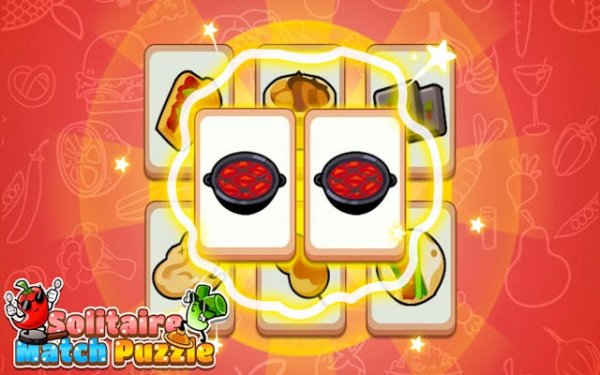
Food Pair Match Puzzle asks players to clear a board of face-down food cards by finding identical pairs. Each turn involves flipping one card, then another; a match removes both cards, while a mismatch turns them back over. Success depends on remembering where previously revealed dishes sit. The game never imposes a timer, so players can pause and think through each selection. This design shifts pressure away from speed and toward observation and recall.
Progression Through Culinary Themes
Early boards contain fewer cards, making them approachable for newcomers. As players advance, the number of cards grows and the arrangement changes with each session. That fresh layout prevents memorizing a single board and keeps the challenge centered on working memory. The food theme spans dishes such as barbecue, pasta, and custard tarts, giving each card a distinct visual identity that supports recall. Because every level presents a new arrangement, progress feels tied to skill rather than repetition.
Who This Game Suits
The absence of time limits and the family-friendly content make Food Pair Match Puzzle a fit for casual players, older adults seeking gentle mental exercise, and anyone wanting a short break. A session can last a few minutes or longer, depending on how many boards the player chooses to clear. Players who prefer fast reflex games may find the pace slow, but those who enjoy memory puzzles and low-pressure progression will find the format consistent.
Compatibility
✅ Works on PC & Mobile | Recommended: Chrome / Safari / Edge









Editorial Notes