Two-Player Teamwork at the Core
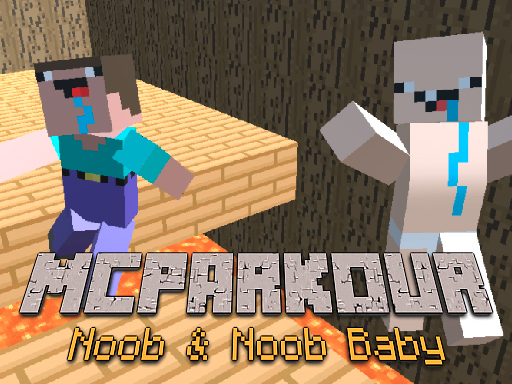
Cooperative Parkour Challenge is built entirely around a single idea: two players must move through each level as a unit. One controls a noob, the other a baby noob, and both share the same goal of reaching the finish line. A fall into any lava pit restarts the level, so neither player can rush ahead. The game pushes partners to talk through every jump and wait for each other before committing to a gap. That constant back-and-forth turns a simple platformer into a communication exercise.
Reading the Course
Levels are arranged as sequences of platforms, gaps, and obstacles that change from one stage to the next. Some sections may require both characters to stand on a platform at the same time to activate it, which forces players to coordinate their positions rather than simply follow one path. Because layouts shift between levels, memorizing a single route does not carry over. Instead, players learn to scan the course, identify which jumps are safe, and decide who moves first while the other waits.
Controls and Accessibility
Each player uses the keyboard. One character typically moves with the arrow keys or WASD and jumps with the spacebar, while the second uses a similar control set. The inputs are simple enough that new players can join without a lengthy tutorial. That low barrier matters because the real difficulty comes from timing and cooperation, not from complex button combinations. Short levels also make it easy to retry a failed section without losing much progress.
Visual Style and Tone
The blocky, colorful 3D graphics keep the mood light. Lava pits are clearly visible hazards rather than realistic threats, and the overall presentation avoids violence or inappropriate themes. That makes the game a reasonable choice for siblings, friends, or family members who want a shared activity. The difficulty rises gradually, so early levels teach the basic rhythm of jump-and-wait before later stages demand tighter timing and clearer communication.
✅ Compatibility & Testing
• Desktop (Windows 11, macOS Ventura)
• Mobile (iPhone 14, Samsung Galaxy S23)
• Tablet (iPad Pro, Android tablet)
✅Supported browsers: Chrome, Safari, Edge, Firefox (latest versions)
❌ Not supported: Internet Explorer, older browser versions





Editorial Notes