Level Structure and Objective
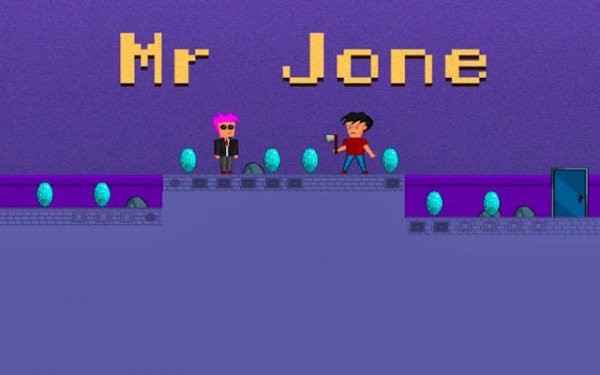
Mr Jone Gem Quest Platformer contains eight levels, each one more difficult than the last. The objective on every stage is consistent: collect all blue gems scattered across the level, then reach the exit door. You cannot skip gems and finish early; the exit only matters once the collection is complete. That two-part goal turns each level into a route-planning exercise rather than a simple dash to the finish line. [IMG_1]
Movement and the Double Jump
Mr. Jone moves left and right with the WASD or Arrow Keys. Pressing W or the Up Arrow makes him jump. The double jump is the move that defines the game: press the jump key again while mid-air to gain extra height and distance. This single mechanic opens up wide gaps, hidden gem locations, and obstacle routes that a normal jump cannot reach. Learning when to trigger the second jump, and how much height it adds, is the difference between a clean run and a restart. [IMG_2]
Difficulty and Restart Pressure
The game is built around precision rather than speed. Mistimed jumps send you back to the beginning of the level, so patience matters more than reflexes. Short hops are useful for landing on narrow platforms, while full double jumps are reserved for long gaps or high ledges. Because there is no clutter or unnecessary distraction, every failure points clearly to a movement mistake you can correct on the next attempt. [IMG_3]
Who This Is For
The simple controls and family-friendly presentation make Mr Jone Gem Quest Platformer easy to start. The precision demands reward practice, so casual players looking for a light challenge and experienced platformer fans who enjoy tight movement both fit the intended audience. Replaying earlier levels to refine movement and build muscle memory is a natural part of getting better at the later stages.
Compatibility
▸ Desktop: Chrome / Edge / Firefox / Safari
▸ Mobile: iOS Safari / Android Chrome
▸ Tablet: iPadOS Safari / Android Tablet Browser
Keep your browser updated for the best experience







Editorial Notes