Teamwork Over Solo Play
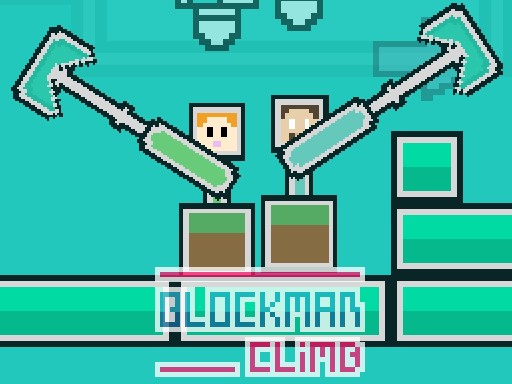
Block Climb is built around a simple premise: two players control block characters in a shared level, and the finish flag only matters if both make it. Going alone often leads to failure because the environment assumes two sets of hands. One player might spin a hammer to clear a barrier while the other waits to climb through, or one might hit a switch that opens a path the partner needs to cross. The game does not punish players for experimenting, but it does reward planning before moving.
Tools and Hazards
Each level mixes a small set of interactive elements. Hammers can be spun to smash barriers or trigger switches. Walls require jumping and grabbing ledges to scale. Thorns slow progress, and the abyss ends the level immediately if a character falls in. These elements are not random; they are placed so that one player's action creates an opening for the other. For example, a hammer might need to be spun at the right moment to knock out a wall blocking a partner's route.
Designed for Short Sessions
The block world uses bright, safe visuals that suit players of all ages. Difficulty increases gradually, introducing new obstacle combinations that test coordination rather than reflexes. Levels are short enough for quick family or friend sessions, and the simple controls—move, jump, grab, and a single action button—keep the focus on communication. Replaying a level is common because coordination improves with practice, not because the game demands grinding.
Compatibility
This H5 game runs smoothly on:
• Desktop computers (Windows / Mac) • Mobile phones (iPhone / Android)
• Tablets (iPad / Android)
🌐 Best experienced with Chrome, Safari, or Edge









Editorial Notes