Cooperative Puzzle Design
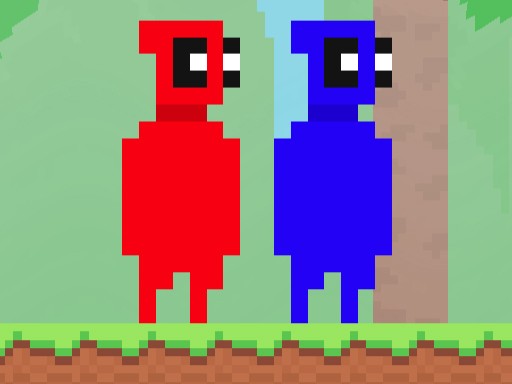
PixelPuzzle is built around a single requirement: both characters must reach the door at the end of each stage. One player controls the blue character, the other controls the red. Neither can finish alone. This design forces constant communication, because moving one character often changes the environment for the other. The game presents moving platforms, gaps, and other obstacles that demand synchronized actions rather than individual speed.
Controls and Movement
Player 1 uses the W, A, S, and D keys to move and jump. Player 2 uses the arrow keys. The layout is intentionally simple so that younger players or those new to keyboard controls can participate without frustration. Each character moves independently, but progress depends on waiting, observing, and acting at the right moment. Jumping is the primary tool for avoiding traps and crossing gaps.
Level Structure and Difficulty
Stages introduce obstacles that require different strategies, though the core loop remains consistent: observe patterns, time your jumps, and stay together. Checkpoints allow the team to retry from the last safe point if one player falls, reducing frustration while still encouraging careful play. The challenge comes from coordination, not from complex inputs or violent content. As levels progress, the timing windows and platform arrangements demand more patience and precise teamwork.
Audience and Play Sessions
PixelPuzzle suits short sessions between siblings, friends, or parent and child. The pixel art is colorful and readable, and the absence of combat or mature themes keeps the experience appropriate for all ages. Because both players share the same goal, the game naturally promotes turn-taking, verbal planning, and mutual support. It is a low-pressure way to practice cooperation.
Compatibility
• OS: Windows 10+, macOS 11+, iOS 14+, Android 10+
• Browsers: Chrome 100+, Safari 15+, Edge 100+, Firefox 100+
• Not compatible with Internet Explorer
Tested on real devices ✅ works as expected





Editorial Notes