How the Curved Sliding Works
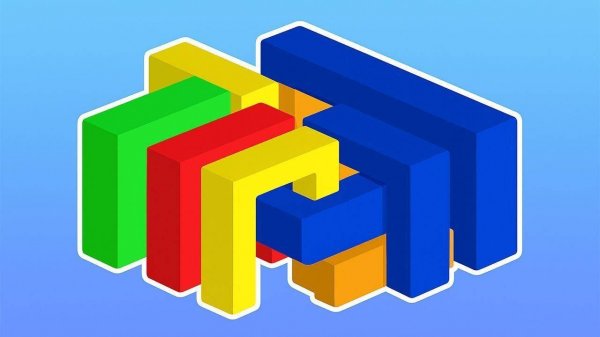
Every puzzle in Curve Fit Block Challenge is built around one action: moving a curved segment from one position to another on a grid. Each piece has a fixed shape and orientation, so it only fits certain gaps. The goal is to rearrange these pieces until a continuous path opens across the board. Because the grid fills with interlocking blocks, a move that looks helpful can close off the only route to the solution. That is what separates this from a standard sliding tile puzzle — the curves change which moves stay possible, so players have to read the whole board before touching a piece.
Why Later Boards Feel Different
Puzzles are arranged in a sequence that grows denser and more tangled. Early boards use few pieces and generous space, which gives newcomers room to learn how the curves interact. Later configurations pack more interlocking blocks into the grid, and the arrangement of those curves changes the set of legal moves. No two boards feel identical, because shifting one curved piece alters the paths available to every piece around it. The difficulty climbs gradually, so each solved board delivers a small, earned sense of progress rather than a sudden wall.
Controls and Visual Design
The interface stays deliberately plain. A tap or click selects a block, and a drag or slide moves it along its open path. That scheme works the same on a touchscreen and with a mouse, which matters for a browser game people may open on a phone or a laptop. A soft color palette and clearly outlined blocks reduce eye strain during longer sessions, and the grid lines give a reliable reference for judging where a piece will land. There are no loud sounds or distracting animations pulling attention away from the board.
Who Gets the Most From It
Because nothing is timed and no score is kept, players set their own pace. Children can build spatial reasoning without the frustration of a countdown, while adults can treat a few boards as a quiet break. The game needs no reading or language skill, so it travels well across regions, and its simple rules let a grandparent and a grandchild work on the same puzzle. Running in a browser with no account or installation removes most barriers to trying it.
Compatibility
✅ Works on PC & Mobile | Recommended: Chrome / Safari / Edge





Editorial Notes