Shot Timing and Power Control
Every possession in Court Precision Hoops comes down to one action: aim, hold to build power, and release. The release moment decides whether the ball drops through the net or clangs off the rim. Distance to the hoop changes how much power you need, so the same release timing will not work from every spot on the court. That single variable creates the game's difficulty curve. Newcomers can make shots early on by watching the power meter, while experienced players learn to read distance and adjust before the hold even begins. The loop is simple enough to explain in one sentence but precise enough that a fraction of a second separates a swish from a miss.
National Team Selection
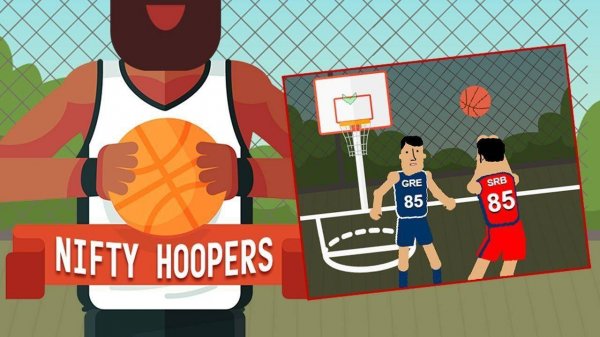
Before each tournament run, you choose one of sixteen national teams. Each team has its own uniform colors and flag, which changes the look of every match without altering the core shooting mechanic. The roster exists for personalization and visual variety rather than gameplay differences, so picking a team is about representation and aesthetics, not stat advantages. That design choice keeps the focus squarely on shot timing instead of team management or player ratings.
Bracket Tournaments and Progression
Matches are organized into bracket-style tournaments. Win a round and you advance to a tougher opponent; lose and the run ends, sending you back to the start. This structure gives each session a clear goal and a real cost for missed shots. Because there are no lengthy menus or complex rules between games, the pace stays brisk, which suits short play sessions. The restart-on-loss format encourages repeated attempts and rewards players who can stay consistent under pressure.
Visual Style and Atmosphere
Courts use bright, colorful backdrops with animated crowds that react when shots go in. The presentation leans toward a cheerful, cartoon-like look rather than realism. Player models and team banners are simple but distinct, reinforcing the international theme. The overall aesthetic is approachable and family-friendly, matching the pick-up-and-play nature of the shooting mechanic.
Compatibility
✅ Works on PC & Mobile | Recommended: Chrome / Safari / Edge










Editorial Notes