Matching Tiles to Hold the Line
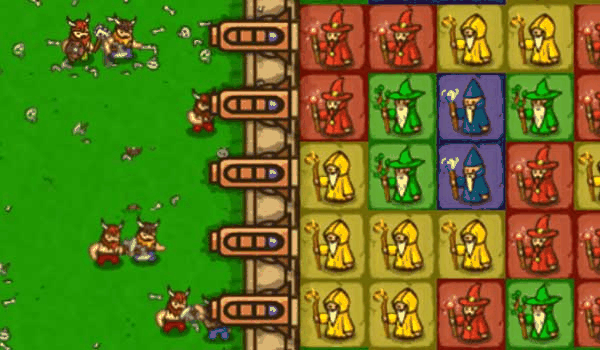
Puzzle Tower Guardian places a grid of colored tiles beside an advancing enemy wave. Your job is to select tiles that form matching sequences. Each cleared sequence produces energy, and that energy powers defensive spells that push enemies back. The loop is straightforward: match, generate, cast, survive. What complicates it is timing. Enemies keep moving while you search the grid, so a slow match can cost you ground even if the tiles themselves are valid.
Prioritizing Matches Under Pressure
Not every match is equal. Tiles near the advancing enemies can slow their progress when cleared, while longer chains yield a stronger burst of defensive magic. You constantly choose between a fast three-tile match that buys a moment and a longer setup that pays off later. Each level introduces new enemy patterns and tile arrangements, so the optimal approach shifts rather than repeating. Balancing speed against combo potential is the central tension.
Reading the Board and the Wave
Bright, distinct tile colors make the grid easy to scan, and the interface shows tower health and incoming wave progress without clutter. Controls support both mouse and touchscreen, which keeps the game playable on desktop and mobile devices. Visual feedback from successful matches and spell casts confirms your actions clearly. The difficulty curve starts gently, then asks for faster recognition and better foresight as levels progress.
Designed for Shared Play
Enemies are pushed back rather than destroyed, giving the game a non-violent tone suitable for younger players. Simple controls and clear objectives mean anyone can start, while later stages reward strategic thinking. The gradual introduction of new tile combinations and enemy types keeps sessions fresh without overwhelming newcomers. It works as a shared gaming experience for families or as a casual solo challenge.
Compatibility
✅ This game supports:
- Desktop browsers (Chrome, Edge, Safari)
- Mobile browsers (Chrome on Android, Safari on iOS)
❌ Does NOT support: - Internet Explorer - Very old browser versions
👉 Try refreshing or updating your browser










Editorial Notes