Tethering and Momentum
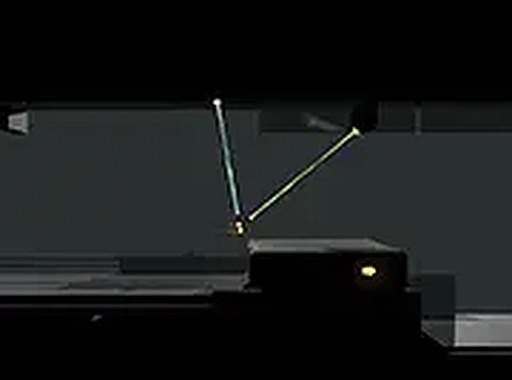
Circuit Swing Logic Adventure is built around one core action: aiming an electric beam at a surface to create a temporary tether. Once attached, the character swings from that point. Releasing at the right moment converts the swing into forward motion toward a distant platform. The challenge lies in judging angle and tether length before committing to a swing, because a mistimed release often means falling short. Keyboard and mouse controls handle both aiming and movement, so precision matters more than speed.
Room Layouts and Obstacle Patterns
Each room inside the facility arranges platforms, barriers, and tether points in a distinct configuration. Some layouts include moving obstacles that require waiting for a safe window before swinging. Others present wide gaps that cannot be crossed with a single tether, forcing players to chain two or more swings together. Because most puzzles have more than one viable route, studying the room before acting often reveals a cleaner path than the first one that comes to mind.
Visual Cues and Browser Performance
The minimalist art style keeps attention on the physics rather than decoration. Subtle lighting and color cues mark which surfaces accept a tether, so players can read a room at a glance. The game runs directly in modern browsers with no installation, and it loads quickly while maintaining smooth motion during complex swings. Full-screen mode helps track the character's arc across wider levels. The game is designed for desktop computers only, since mouse and keyboard input are integral to aiming.
Difficulty Curve and Replay
New concepts arrive one at a time. Early rooms teach basic swinging and momentum, while later stages combine mechanics such as timed releases and narrow landing zones. Progress depends on patience and creative problem-solving rather than fast reflexes. Players who enjoy refining technique can replay rooms to find more efficient routes, and the gradual introduction of new elements keeps the challenge from feeling arbitrary.
Compatibility
✅ This game supports:
- Desktop browsers (Chrome, Edge, Safari)
- Mobile browsers (Chrome on Android, Safari on iOS)
❌ Does NOT support: - Internet Explorer - Very old browser versions
👉 Try refreshing or updating your browser



Editorial Notes