Core Objective and Movement
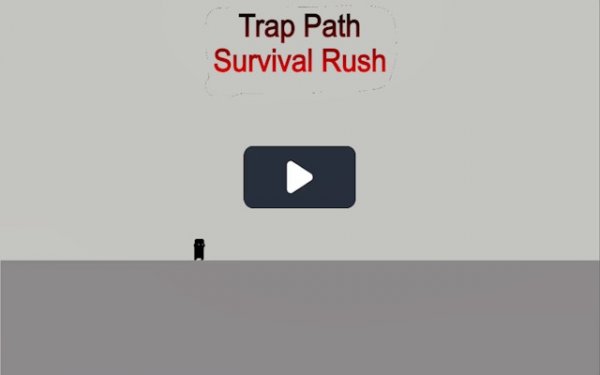
In Path Escape: Survival Run, your goal is straightforward: guide a character along a vibrant, ever-changing path, avoid a variety of traps, and reach the exit door. The game is built around continuous forward motion, with danger arriving from both the path ahead and the sides. You control movement using the left and right arrow keys to shift sideways and the up arrow key to jump over obstacles. This simple control scheme keeps the focus on timing and spatial awareness rather than complex inputs.
How Traps Shape Each Run
Traps in Path Escape: Survival Run are dynamic and randomly placed, so no two runs follow the same pattern. This randomness forces you to read the path ahead and adjust your route on the fly. Because hazards appear unpredictably, success depends less on memorizing a fixed layout and more on developing a general sense of rhythm and reaction. The game rewards players who scan ahead and plan their next few moves instead of reacting only to what is immediately in front of them.
Controls, Difficulty, and Accessibility
The control scheme is intentionally minimal: left, right, and jump. That simplicity makes the game easy to pick up, but the challenge comes from executing those moves under pressure. Jump timing is critical—too early or too late and you will clip an obstacle. The difficulty curve is driven by the speed and density of traps, which increase the demand on your reflexes as you progress. There is no violent content, and the upbeat visual design keeps the experience light, making it suitable for players of all ages.
Who It Suits and How to Improve
Path Escape: Survival Run fits players who enjoy short, repeatable arcade challenges. A single run can take just a few minutes, which makes it easy to play in short breaks, but the scoring system encourages repeated attempts to beat your own high score. To improve, focus on learning common trap patterns and practicing jump timing. Staying patient helps—rushing often leads to mistakes. Regular practice builds muscle memory and a consistent rhythm, which are your best tools for navigating the ever-changing path.
Compatibility
This H5 game runs smoothly on:
• Desktop computers (Windows / Mac) • Mobile phones (iPhone / Android)
• Tablets (iPad / Android)
🌐 Best experienced with Chrome, Safari, or Edge










Editorial Notes