Assembling Classic Cars Piece by Piece
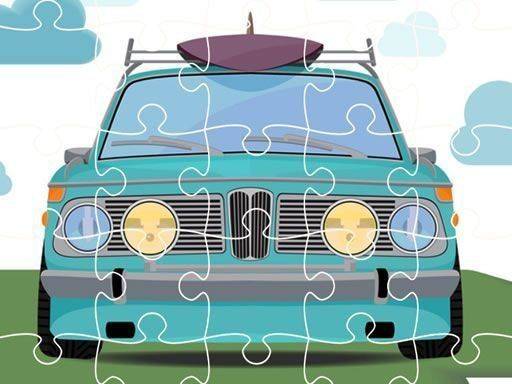
Vintage Auto Jigsaw Puzzle turns iconic automobiles into digital jigsaws. You pick a retro car image, and it breaks apart into scattered pieces. Your task is to drag each piece back onto the grid. Correct placements snap into position, giving clear visual feedback that the picture is coming together. The subject matter ranges from retro roadsters to timeless sedans, so the puzzle content itself becomes a small gallery of automotive history.
No Timers, No Pressure
Nothing in this game pushes you to hurry. There are no countdown clocks, no score multipliers, and no penalties for leaving a puzzle unfinished. That design choice changes how you play: you can study the image, sort pieces by color or shape, and place them in whatever order makes sense to you. A short session might involve placing a handful of pieces; a longer one might complete an entire car. The absence of time pressure makes it suitable for players who want a calm activity rather than a challenge.
Controls and Accessibility
Interaction is limited to dragging and dropping. You use a mouse or a finger to move pieces from the scattered area onto the board. When a piece is near its correct spot, it locks in automatically. Some versions of the game may allow rotating or adjusting pieces, but the core loop stays the same: select, drag, drop. Because the mechanic is so simple, players of any age can start without reading instructions. The game runs directly in a web browser with no download or registration step.
Approaches That Help
Edges and corners are usually the easiest pieces to identify, so building the frame first gives you a structure to work within. After that, distinctive car features—grilles, headlights, chrome bumpers—act as landmarks for grouping similar pieces. If you get stuck, stepping away for a moment often makes patterns easier to spot when you return. Since there is no time limit, experimenting with different sorting strategies costs nothing. Over repeated puzzles, you may find that you recognize shapes and color clusters faster.
Compatibility
This H5 game runs smoothly on:
• Desktop computers (Windows / Mac) • Mobile phones (iPhone / Android)
• Tablets (iPad / Android)
🌐 Best experienced with Chrome, Safari, or Edge












Editorial Notes