Matching Balls with a Billiard Twist
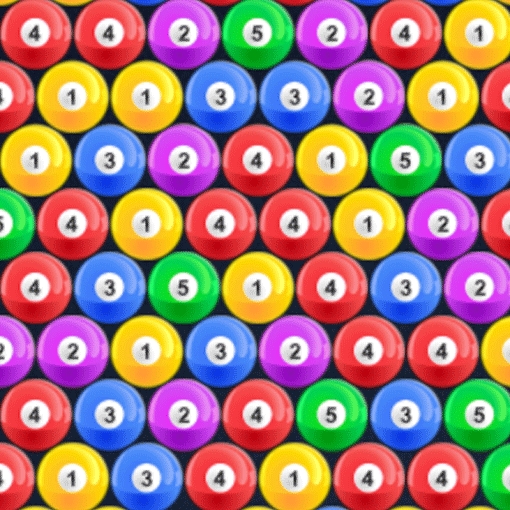
Billiard Bubble Blaster takes the familiar bubble-popping formula and swaps in billiard balls. You control a launcher at the bottom of the screen, aiming upward to create groups of three or more same-colored balls. When a match forms, those balls disappear. The challenge is to clear the board before the lowest row reaches the bottom boundary, which ends the round. The billiard theme is mostly visual, but it gives the color-matching a distinct look compared to standard bubble shooters.
Aiming, Angles, and Wall Bounces
Shots are not always direct. Ricocheting a ball off the side walls lets you reach gaps that a straight shot cannot. That makes angle planning part of every turn, especially as the board fills up. The launcher follows your mouse or finger, and a click or tap releases the ball. Simple controls, but the wall-bounce mechanic adds a layer of precision that separates careful players from rushed ones.
Escalating Color Complexity
New colors enter the mix as a session progresses. Each addition makes matches harder to find and raises the risk of a cluttered board. Because the game introduces colors gradually, difficulty scales without sudden spikes. You get time to adjust your aim and rethink your approach. The result is a steady ramp that rewards focus rather than reflexes alone.
Session Structure and Visual Clarity
Every session starts with a fresh arrangement of balls, so no two rounds play the same. The game supports full-screen mode across computers, tablets, and phones, and the bright, distinct ball colors help you spot matches quickly. There is no timer or move limit mentioned, so the pressure comes from the descending rows and your own accuracy. That makes it easy to pick up for a short break or stay longer for a tougher board.
Compatibility
💻 Desktop | 📱 Mobile | 📟 Tablet
– All supported · Best with Chrome or Safari


Editorial Notes