This game excels at making a core physics concept accessible to young children. The simple predict-and-see format is highly effective, and the variety of objects keeps each round interesting. The absence of ads and complex menus makes it a stress-free tool for parents and educators. It is a wonderful example of how digital play can support early science education without overwhelming the user.
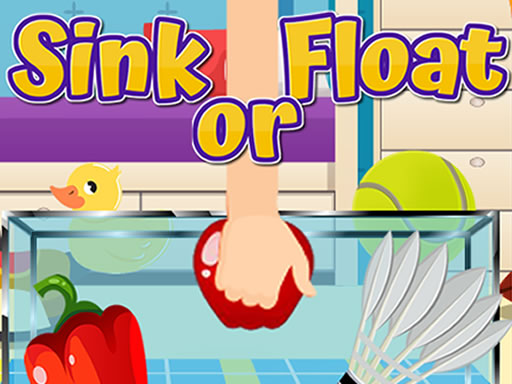
This interactive science activity introduces young learners to fundamental physics concepts through playful observation. The core challenge revolves around predicting whether common household items will remain on the water's surface or descend when placed in a liquid environment. By engaging with familiar objects, children naturally develop an intuitive understanding of density and material properties. The experience is designed to spark curiosity about the physical world, encouraging players to think critically about why different materials behave differently in water. Each round presents a new item, prompting the player to apply reasoning based on weight, shape, and composition. The game provides immediate visual feedback, reinforcing correct predictions and gently guiding learning from mistakes. This approach makes complex scientific ideas accessible and enjoyable for young minds, supporting both independent play and guided classroom activities. The content is entirely family-friendly, with no violent or inappropriate themes, ensuring a safe digital environment for children.
Players are shown a picture of an everyday object, such as a fruit, toy, or tool. They must decide whether that object will stay on top of the water or drop below the surface. After making a choice, an animation demonstrates the outcome, confirming or correcting the prediction. Correct choices add to the player's score, encouraging repeated attempts to improve. The controls are simple and intuitive, typically involving a single tap or click on one of two options. The game progresses through a series of items, each offering a new learning opportunity. No reading or complex instructions are required, making it suitable for pre-readers and early elementary students.
The experience is built around a clean, distraction-free interface that focuses attention on the learning task. Immediate visual feedback after each prediction helps reinforce understanding. A scoring system tracks progress over multiple rounds, motivating players to continue practicing. The content includes a variety of everyday objects, each chosen to illustrate different principles of density and buoyancy. The game is designed to be replayable, as the order of items may vary, providing fresh challenges each session. It works well on both desktop and mobile devices, allowing flexible use at home or in the classroom. All interactions are safe, with no external links or advertisements targeting children.
Consider the material each object is made from. Dense materials like metal or stone are more likely to sink, while lightweight or hollow materials like plastic or cork tend to float. Observe the object's size and shape as well; a large, flat object may displace more water and float better than a small, dense one. Practice regularly to improve your prediction accuracy, and learn from each outcome to build a stronger mental model of buoyancy.