Defensive Placement and Wave Management
Home Protection Strategy puts you in command of a static route that opposing forces traverse in organized waves. Your primary task is choosing positions along this route for defensive structures. Each structure has distinct properties, so where you place it matters as much as which one you pick. The goal is to build an efficient network that stops every advance before enemies reach the endpoint. Understanding how each piece interacts with the path and the opponent types you face is central to success.
Resource Economy and Upgrade Choices
Neutralizing threats earns in-game currency. You spend that currency on new defensive units or on improving existing ones. This creates the game's central strategic tension: expand your network or strengthen what you already have. Early waves provide modest resources, so careful spending matters from the start. Later stages demand larger investments, forcing you to evaluate which upgrades offer the best return. The system rewards balancing immediate needs against long-term planning.
Visual Clarity and Audio Feedback
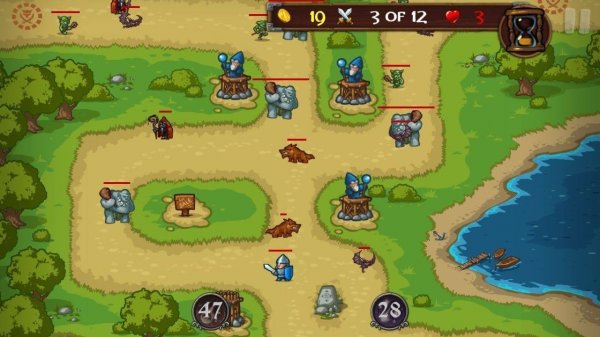
The game uses a bright, approachable visual style. Different unit types are easy to tell apart, and enemy movement is simple to track. Each defensive structure has a distinct appearance that hints at its function. Sound effects provide clear feedback when units activate or when threats are neutralized, helping you stay aware of events without watching every moment closely. The overall presentation remains calm and focused, suitable for shared family spaces.
Difficulty Curve and Strategic Depth
Early levels introduce basic concepts with few variables, letting new players grasp the fundamentals. As you advance, new enemy types appear with different movement patterns and resilience. Later stages may feature branching paths or special opponents that require revised strategies. This gradual increase in complexity keeps the experience fresh without becoming overwhelming. While the core mechanics are straightforward, the arrangement of units, timing of upgrades, and response to new threats all influence success. There is no single correct solution for most levels, encouraging experimentation. The design makes the game accessible to younger players while still engaging for adults who appreciate tactical thinking.
Compatibility
✅ Works on PC & Mobile | Recommended: Chrome / Safari / Edge








Editorial Notes