Placing Markers and Reading the Board
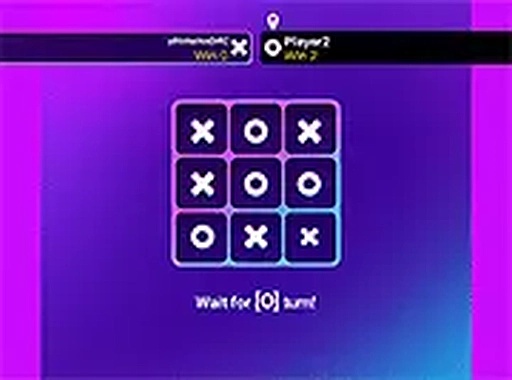
Every match of Grid Match Strategy revolves around a nine-cell grid. On your turn, you tap or click any empty cell to place one marker. The objective is to occupy three cells in a horizontal, vertical, or diagonal line before your opponent completes a line of their own. The game ends the moment a line is formed, or in a draw when all nine cells are filled with no winner.
What makes each turn interesting is the dual responsibility of building your own pattern while watching for your opponent's developing threats. A move that extends your line may also leave a gap your opponent can exploit. The game rewards players who can hold both tasks in mind at once.
Opponent Choices and Difficulty
Grid Match Strategy offers three computer difficulty levels. The easiest setting gives newcomers room to learn basic patterns without punishing mistakes. The hardest setting demands careful planning and the ability to adapt when the board shifts against you. For players who prefer a human opponent, a two-player mode lets two people share one device and take turns trying to outmaneuver each other.
Interface and Accessibility
The interface stays deliberately minimal: a clear grid, distinct markers for each side, and a turn indicator that shows whose move it is. Responses to taps and clicks are immediate, so there is no lag between deciding and placing. Because the game runs entirely in a web browser, no download or installation is required, and the layout adjusts to both mobile screens and desktop monitors.
Strategic Depth in a Small Format
Simple rules do not mean shallow play. Grid Match Strategy asks you to balance offense and defense on every turn, deciding whether to pursue your own line or block an opponent's. Over repeated matches, players begin to recognize common patterns and develop opening strategies. The result is a brief but mentally engaging exercise in foresight and pattern recognition.
Compatibility
• OS: Windows 10+, macOS 11+, iOS 14+, Android 10+
• Browsers: Chrome 100+, Safari 15+, Edge 100+, Firefox 100+
• Not compatible with Internet Explorer
Tested on real devices ✅ works as expected










Editorial Notes