Sorting Rules That Drive the Puzzle
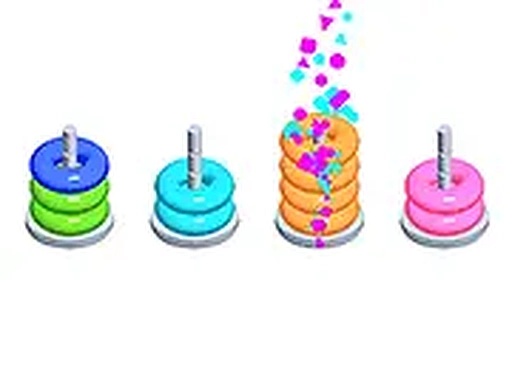
The core activity in Hue Stack Logic Challenge is grouping rings of the same shade together. Each vertical stack has a fixed capacity, and a ring can only be placed on a stack if the top ring matches its color and the stack has room. This single rule generates the game's difficulty: every move changes which colors are accessible on top of each stack, so a placement that looks helpful now can block a color you need later. The challenge comes from planning several moves ahead rather than reacting one ring at a time.
How the 500+ Levels Ramp Up
Across more than 500 puzzles, the game introduces sorting patterns gradually. Early levels use basic color groupings with enough free space to recover from mistakes. Later stages add constraints such as limited stack space or additional colors, which narrow the safe moves available. Because the layout varies between puzzles, the same sorting rule produces different problems instead of repeating one template. The progression is designed so players build pattern recognition before the constraints tighten.
Three Modes for Different Sessions
Classic mode provides a clear goal without time pressure, making it the default for methodical play. Timed mode adds a countdown for players who prefer quick decisions and faster sorting. Relaxed mode removes all pressure, letting you experiment with sequences and undo moves freely. This range means the game works for short casual breaks as well as longer problem-solving sessions, depending on which mode you choose.
Interface and Access
The interface uses bright, distinct colors that are easy to tell apart, which matters when several shades appear on screen at once. Controls are simple enough to start immediately, and the game runs entirely in a web browser with no installation. It works on computers, tablets, and phones, so progress is not tied to one device.
Approaches That Help
Experienced players create empty stacks early because they act as flexible holding areas for rings that are temporarily in the way. Moving a ring to a temporary spot is often better than blocking a nearly complete stack. When a sequence fails, the undo function lets you try a different order without restarting. Regular practice improves pattern recognition and sorting speed.
Compatibility
This H5 game runs smoothly on:
• Desktop computers (Windows / Mac) • Mobile phones (iPhone / Android)
• Tablets (iPad / Android)
🌐 Best experienced with Chrome, Safari, or Edge












Editorial Notes