Balancing Two Critical Tracks
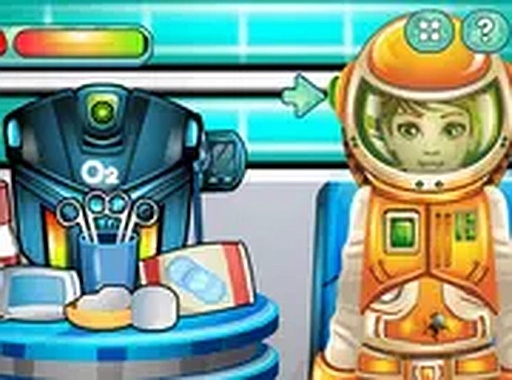
Every session in Space Station Rescue Logic Game hands you two simultaneous problems: a crew member who needs medical attention after an incident, and a set of spacecraft systems that must be brought back online. You cannot ignore either track for long. The game forces you to constantly reassess which task is more urgent, turning each playthrough into a test of prioritization rather than raw clicking speed. Because both objectives share the same countdown timer, every decision to focus on one side means the other waits.
Simple Controls, Deep Decisions
The interface is entirely point-and-click, working equally well with a mouse or a touchscreen. Interactive elements are highlighted, and visual cues guide you through the correct sequence of actions. There are no hidden menus or complex mechanics to memorize, so you can start solving puzzles within seconds. The challenge comes from deciding what to do first, not from fighting the controls. This accessibility makes the game approachable for younger players while still offering enough mental friction for adults.
Cheerful Space Setting
Bright colors and simple shapes define the cartoon-like art style. Stars, planets, and space station interiors shift subtly as you complete tasks, and animations are smooth without being distracting. The light tone keeps the experience calm and methodical, reinforcing that this is a game about thinking ahead, not reacting quickly. The visual design also ensures that important elements stand out without overwhelming you with clutter.
Time Pressure That Rewards Planning
A visible countdown timer adds gentle pressure, but it is not punishing. Completing certain key actions resets or extends the timer, so efficient planning directly buys you more time. Players who pause to assess the situation before clicking tend to perform better than those who rush. The game encourages a steady, thoughtful pace, making it a good fit for anyone who prefers strategy over reflex-based challenges.
Replayability Through Variation
Each session presents a slightly different arrangement of tasks, so no two playthroughs are identical. The order in which problems appear changes, forcing you to adapt your approach every time. There are no unlockable levels or persistent upgrades, keeping the focus on moment-to-moment puzzle solving. You can restart at any time to try for a faster completion or a more efficient sequence of actions.
Compatibility
• OS: Windows 10+, macOS 11+, iOS 14+, Android 10+
• Browsers: Chrome 100+, Safari 15+, Edge 100+, Firefox 100+
• Not compatible with Internet Explorer
Tested on real devices ✅ works as expected









Editorial Notes